professor Ljubica Vasic, PhD
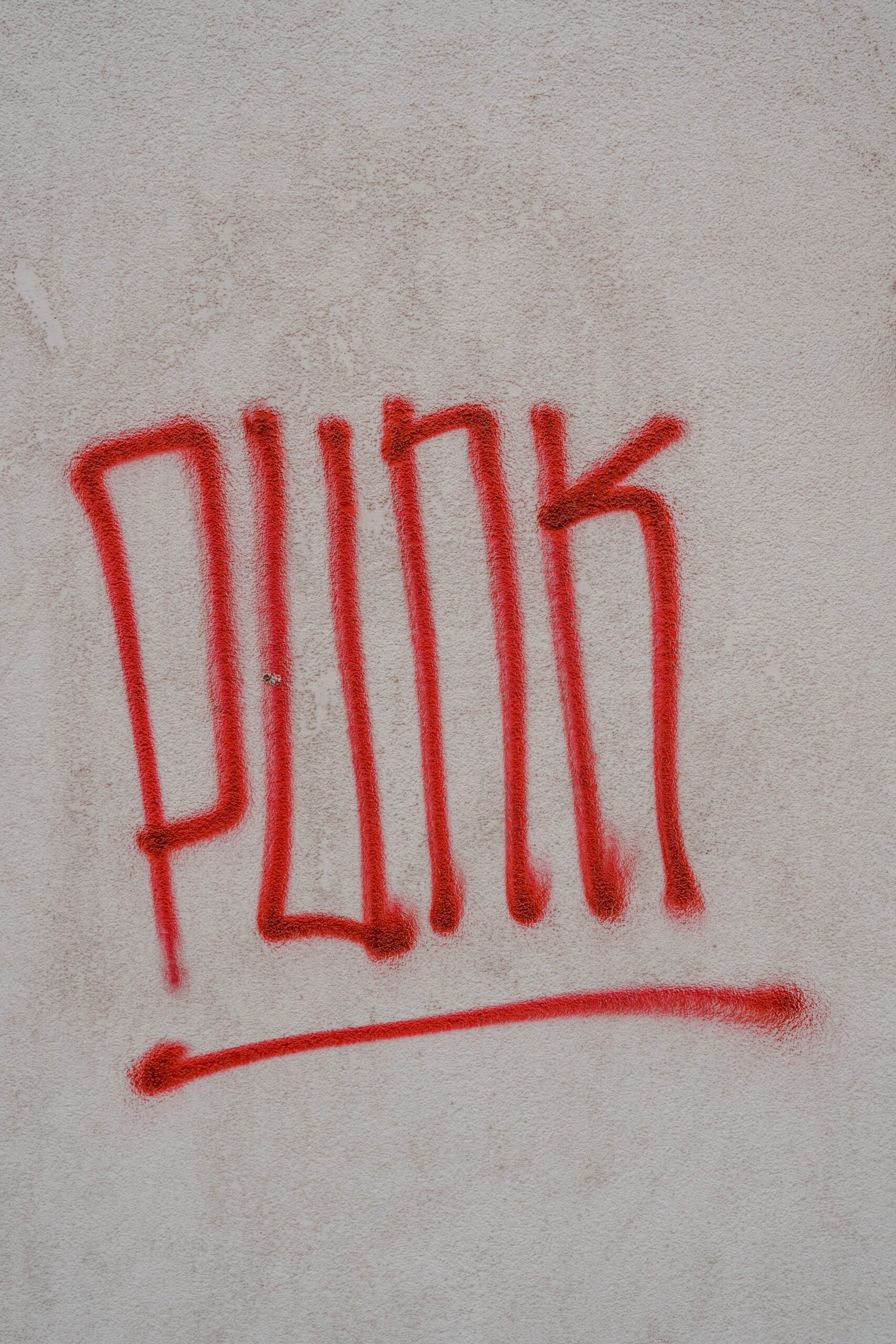
This paper explores the role that punk music and diplomacy play in opposing war and armed conflict, as well as the relationship between punk as a movement, on one hand, and diplomacy as an instrument of official foreign policy, on the other. Although seemingly completely different at first glance – since the lyrics of punk songs are anarchic and often street-like, while the language of diplomacy is rigid and formal – punk and diplomacy share common characteristics reflected in their roles in maintaining peace. Both serve as means of soft power against war and armed conflict. The lyrics and themes of some punk songs express sorrow over the destruction caused by wars and armed conflicts, they call for peace, and criticize authorities that promote war and violence. Additionally, some punk songs depict the suffering of civilians, soldiers, and other individuals protected by international conventions. Diplomacy functions to prevent and end existing armed conflicts and wars. As the opposite of the use of force, diplomacy seeks to resolve disputes through reasoned argument and to preserve peace as a fundamental value of international relations. This paper analyzes precisely these relationships through the lens of diplomacy and the punk movement.
Keywords: Punk songs, peace, diplomacy, war, armed conflict
Introductory Considerations
Although the punk movement does not formally operate within the legal system, its anti-war activism corresponds with the fundamental principles of international law – especially the norms of ius cogens, which prohibit aggression, genocide, and crimes against humanity. In this way, punk, as a moral corrective of society, symbolically affirms the legal ideal of peace.
On the other hand, for diplomacy to be legitimate, it must reflect the will of the people and the principles of humanity. When diplomacy and art act together, they create space for transformative communication – a dialogue that transcends narrow interests and opens the possibility for genuine peace.
Punk emerged in the mid-1970s as a radical cultural and musical reaction to economic crises, political stagnation, and social hierarchies in Great Britain and the United States. Although initially perceived as a marginal and destructive subculture, punk soon grew into a global phenomenon with strong symbolic and political implications (Hebdige 1979: 18–22). This paper proceeds from the assumption that punk, despite its anti-institutional nature, has a significant influence on contemporary diplomatic relations. Traditionally understood diplomacy implied formal relations among states, conducted through official channels and strictly codified protocols. However, by the late twentieth and early twenty-first centuries, the concept of diplomacy expanded, particularly through the notions of cultural and public diplomacy (Melissen 2005: 5-7). In this context, subcultures such as punk become relevant carriers of meaning and alternative actors in international communication.
War and Armed Conflict
War and armed conflicts are phenomena as old as human society itself, since from the earliest civilizations – such as Egypt, Greece, and Rome – they were an integral part of political and social life. During that period, there was no legal regulation of warfare (Encyclopedia of Public International Law: 25–31), and the victor exercised absolute power over the life and property of the defeated party.
In ancient Greece, the doctrine of the “just war” (bellum justum) was developed, according to which only a war arising from a just cause (justa causa) and waged in defense of lawful authority could be considered legitimate. This concept was later elaborated by thinkers during the Middle Ages and the early modern period.[3] Particular emphasis should be placed on the Dutch jurist Hugo Grotius, who in his work De jure belli ac pacis was the first to systematically formulate the distinction between jus ad bellum (the right to wage war) and jus in bello (the rules governing the conduct of war), thereby laying the foundations of modern international humanitarian law (Grotius, 1979: 17–21).
Military theorist Carl von Clausewitz defined war as “an act of violence intended to compel our opponent to fulfill our will,” famously characterizing it as the continuation of politics by other means (Clausewitz, 1832/1984). In the nineteenth century, the first international conventions were adopted, marking a key turning point in the legal regulation of warfare – the First Geneva Convention (1864) and the First Hague Conference (1899), followed by the Second Hague Conference (1907). These instruments laid the foundations of modern international humanitarian law by prescribing basic rules for the protection of the wounded, the sick, prisoners of war, and the civilian population (Best, 1980). These conventions signaled the beginning of the process of humanizing the law of war and affirming the principle of individual criminal responsibility for war crimes, representing a significant departure from earlier customary law ( Međunarodne konvencije o ratnom pravu i o sigurnosti :1979).
Nevertheless, the adoption of numerous international instruments did not lead to the cessation of wars or the crimes accompanying them. On the contrary, the twentieth and early twenty-first centuries were marked by numerous armed conflicts in which war crimes continued to constitute a tragic and unavoidable reality of international relations. After the Second World War, the strict distinction between war and armed conflict disappeared in international law – both terms now imply the application of norms of international humanitarian law. The Geneva Conventions of 1949 (Ženevske konvencije i Dopunski protokoli, 2009), confirm this practice by prescribing their application in all cases of armed conflicts between states, even in the absence of a formal declaration of war.[4] This affirms the obligation of parties to a conflict to respect the rules of the law of war and to protect human dignity. Similar provisions are contained in a series of international declarations and conventions adopted after 1945. Parties participating in an armed conflict possess not only rights but also an imperative obligation to fully apply the norms of the law of war.
An armed conflict arises at the moment when one party—whether a state, an organized group, or another subject – resorts to the use of force against another party, either from the moment of a formal declaration of war or when a competent state authority notifies the United Nations, or the other party to the conflict, of its participation in collective enforcement measures (Perazić 1971: 29–30).
The Development of Diplomacy and the Punk Movement
The development of modern diplomacy began after the Peace of Westphalia in 1648, when the principle of state sovereignty was formally affirmed for the first time as a fundamental principle of international relations. This process continued throughout the eighteenth century, through the Congress of Vienna in 1815 and up to the Congress of Berlin in 1878, while in the nineteenth century key codifications of public international law were adopted, encompassing diplomatic practice as well. In the period between 1856 and 1914, that is, until the outbreak of the First World War, more than one hundred international conferences and congresses were held, at which over 250 multilateral conventions regulating, among other issues, matters of diplomacy were adopted (Šahović 1958: 22-69).
By its nature and role, diplomacy is considered a segment of public international law, and all multilateral and bilateral conventions in this field form its inseparable part. Prior to the mid-twentieth century, diplomatic relations were mostly regulated by international customary law and individual bilateral treaties or agreements that produced legal effects only for their signatories (Bartoš 1961: 1–2). Only the Vienna Convention on Diplomatic Relations (1961) and the Vienna Convention on Consular Relations (1963) established a comprehensive legal framework that continues to be consistently applied today (Lopičić–Lopičić–Jančić 2021).
In contemporary international practice, over recent decades, the concept of cultural diplomacy has been increasingly affirmed, focusing on the exchange and promotion of cultural content as a specific form of foreign policy activity (Rogač Mijatović 2014). Like many other terms denoting particular types of diplomacy, this concept is not universally standardized, but in practice it refers to coordinated activities through which a state builds and expands its cultural influence. The role of cultural diplomacy most often falls within the competence of ministries of culture, in close cooperation with ministries of foreign affairs. Its implementation takes place through diplomatic and consular missions, which carry out the decisions of the sending state’s government aimed at international cultural cooperation and the presentation of national identity (Cull 2008: 19–21).
Most ministries of foreign affairs therefore maintain special departments or directorates responsible for the creation and implementation of cultural programs abroad, while informational activity – encompassing politics, the economy, and culture – is crucial for strengthening the international reputation of each state (Jovašević 2010: 5–15). Within diplomatic and consular missions, there are also specially appointed diplomats, most often holding the title of press attaché, who are responsible for information dissemination and cultural exchange (Lopičić 2013: 133–135).
Cultural diplomacy employs art, music, literature, and other forms of cultural expression as “soft power” to build trust among nations, promote values, and encourage dialogue. On the other hand, the punk movement, although born as a rebellion against institutional structures, has paradoxically become a significant actor of informal cultural diplomacy. Its global network of musicians, artists, and activists contributes to the exchange of ideas about freedom, equality, and resistance to repression, crossing national borders more rapidly than classical diplomatic channels. The language of the punk movement – direct, provocative, and emotional – at first glance appears opposed to the subtlety of official cultural diplomacy, which employs measured, inclusive, and strategic forms of communication. Nevertheless, both approaches share the goal of creating space for dialogue and understanding. While cultural diplomacy institutionally nurtures peace through artistic cooperation and intercultural respect, punk, through its engaged artistic expression, draws attention to the social tensions that can threaten peace, as well as to the need for solidarity.
The Language of Diplomacy
From a linguistic perspective, the nineteenth century was marked by the dominance of the French language in diplomacy, so that the majority of scholarly literature, regardless of its country of origin, was published in French. After the First World War, English assumed primacy and has remained the key global diplomatic language, while French, although still one of the five official languages of the United Nations, has been significantly marginalized in professional literature since the Second World War.
When speaking of the language of diplomacy, regardless of the language used by a statesman, diplomat, or a person authorized to act on behalf of a particular state or international organization, careful word choice is essential. The language of diplomacy is characterized by formality and striving toward compromise; its vocabulary is subtle and its style measured, since every nuance may carry political weight. Sentences are precisely formulated, and the tone is thoughtful and neutral, as every nuance entails potential political consequences, in some cases serving to prevent the escalation of conflict.
In contrast, the language of the punk movement is deliberately rough, provocative, confrontational, and direct. Punk employs harsh metaphors and irony to express resistance to authority and to awaken critical thinking, often provoking open dialogue. While diplomats carefully select terms to avoid conflict, punk rhetoric intentionally provokes, uses irony, and amplifies emotional intensity.
The Emergence of Punk
The punk movement emerged in the mid-1970s as an explosive response by youth to the social, political, and economic crises of the industrial West. Its essence lies not only in music, but also in the rejection of authority, war, political repression, and the consumerist order.
Punk created its own cultural language in which art, music, and ethics became carriers of messages of peace and resistance to structural violence. On the other hand, diplomatic instruments – negotiations, mediation, cultural exchange, and international agreements – constitute the foundation of institutional action in conflict prevention.
Diplomacy, in a broader sense, is not exclusively the domain of state actors. The development of the concept of cultural diplomacy has opened space for the participation of artists, intellectuals, and social movements in international dialogue. In this way, cultural expressions become instruments for overcoming conflict, promoting understanding, and shaping awareness of the consequences of war. Punk can be viewed as a communicative channel that operates outside official institutional frameworks, yet with strong international influence. While traditional diplomacy uses symbols, culture, and art to promote state interests, punk uses art as a means of opposing dominant narratives. Through songs, graphic art, fanzines, and concerts, punk spread global anti-militarist messages. Bands such as The Clash, Dead Kennedys, and Crass explicitly criticized wars, nuclear armament, and imperialism. Punk culture, although marginalized, represents through its ethical stance and global reach an example of “bottom-up” social diplomacy, based on solidarity and ethical resistance.
The punk movement and diplomacy, although seemingly opposed at first glance, share a common idea – communication across borders. While diplomacy seeks to preserve peace through institutional mechanisms, punk acts as the conscience of that system, pointing to its contradictions and moral shortcomings.
As a cultural phenomenon, punk awakens a conscience that, through music, art, and ethical stance, reminds us that peace is more than an international agreement – it is a cultural and moral value. The connection between diplomacy and the punk movement may at first appear paradoxical: the former embodies institutional formality, while the latter symbolizes anarchic rebellion. However, both phenomena, in their essential expression, strive toward the same goal – the prevention of war and the preservation of peace and human dignity. Diplomacy speaks the language of protocol, and punk speaks the language of rebellion, yet both speak in the name of peace. In a time when the world faces new forms of violence and global injustice, the convergence of these two forces – institutions and counterculture – can serve as inspiration for new models of peaceful international cooperation and a legal consciousness grounded in humanism.
Punk as a Cultural and Political Phenomenon
Punk is not merely a musical genre, but a complex cultural system that includes fashion, language, visual art, and a specific political stance. Its fundamental characteristic is the challenge to authority and dominant ideologies, manifested through provocative aesthetics and explicit messages in song lyrics (Savage 1991: 64–66). Hebdige emphasizes that punk functions as a form of symbolic resistance, in which style becomes a means of political communication (Hebdige 1979: 102–105). This aspect of punk is important for understanding its diplomatic potential, as it demonstrates how culture can convey political messages outside institutional frameworks.
The punk band Sex Pistols did not aspire to be merely a footnote in some future, revised edition of a sociological study of postwar youth subcultures in Great Britain; their ambitions were far greater. What they sought to articulate can perhaps be glimpsed in a fragment that formed part of the collage on the back cover of the Clash’s first album, White Riot (1977): that there may exist a certain tension in society, when excessive pressure brings industry to a standstill or results in barricades in the streets; years after liberals had dismissed the idea as outdated romanticism, some unidentified person wrote, at some unidentified time: “a journalist invents a theory that this represents a conflict of generations. Youth, after all, is not a permanent condition, and a conflict of generations is not nearly as fundamentally dangerous to the ruling order as a conflict between rulers and those they rule” (Markus 2013: 20). It is precisely in this distinction that one can recognize what the Sex Pistols may have been striving for: the articulation of a conflict between rulers and subjects.
The pop project of the Clash, a London punk band often labeled as “number two,” largely consisted of an attempt to resolve the enigmas the Sex Pistols had left behind. Such an approach made sense, except that even a single listening to “God Save the Queen” undermined any possibility of interpretation. The devastating disgust in Rotten’s voice (“We love our Queen / We mean it, man / God save – this is the end of that line”), the blinding uncompromising nature of the music itself, so intense that it turned into a self-sufficient, all-encompassing new value – pure sound – made analytical distance impossible. “God Save the Queen” advanced demands that no authority could ever fulfill. “God save” – the very intonation with which this phrase was delivered clearly suggested that salvation did not exist. The accompanying guitar riff splits the song in two, and everyone who heard it experienced it precisely that way – as divided. What, after that, could possibly remain? (Markus 2013: 20)
A possible answer was masquerade. With the single “Pretty Vacant,” their third release, Sex Pistols metaphorically rose from old and cold graves like the Lollards, bearers of an ancient British heresy that equated labor with sin and rejected it entirely. Labor, according to biblical interpretation, was God’s punishment for Original Sin, but the Lollards thought otherwise. They proceeded from the assumption that God is perfect, that men and women are God’s creation, and that therefore men and women are themselves perfect and incapable of sin – except insofar as they betray their own perfect nature by surrendering their God-given autonomy to the authority of the Great, accepting the lie that the world was created for something other than humanity’s perfect satisfaction. Such a creed was dangerous in the fourteenth century; it was all the stranger to encounter it in a twentieth-century pop song. Yet it was present – and who could know what suppressed desires it articulated? (Markus 2013: 20)
Socialists such as Bernard Rhodes could not have foreseen that by 1979 the number of unemployed would reach 800,000. Nor was it ever entirely clear what Malcolm McLaren or his partner Jamie Reid – an anarchist publisher and postmodern artist – believed they knew before the boutique Sex. Unemployment in the United Kingdom reached the unimaginable figure of one million by the time “Pretty Vacant” was released in July 1977, and the punk band Chelsea summarized this social fact in the protest single “Right to Work.” Johnny Rotten, however, never adopted the language of protest in which grievances are framed in a pleading tone addressed to the authorities, thereby recognizing the legitimacy of power through the very act of address. That was not the case here at all. In “Pretty Vacant,” the Sex Pistols demanded the right not to work and the right to reject all values traditionally associated with labor: perseverance, ambition, respectability, moderation, honesty, hope, the past for which God allegedly invented labor as a means of redemption, as well as the future that labor is supposed to build. “Your God has gone,” Rotten had already sung earlier in “No Feelings,” on the B-side of the first, withdrawn release of the single “God Save the Queen” – “He’ll come back one day.” Compared to Rhodes’s vision of society, Rotten was speaking in unknown tongues (Markus 2013: 20-21).
In this sense, it was an entire project: God and the state, past, present, and future, youth and labor – all of this stood behind the Sex Pistols as they moved toward the end of their first and only year on the charts. What still remained bore the name “Holidays in the Sun”: a hard-earned holiday, admittedly geopolitical and world-historical, encompassing a territory larger than any the Sex Pistols had ever set foot on, and a temporal span longer than the duration of their own existence (Markus 2013: 20–21).
Punk is also a transnational phenomenon. Its rapid spread across Europe, Latin America, and Eastern Europe during the Cold War enabled the creation of informal communication networks that often operated in parallel with official diplomacy (Dunn 2016: 41-44).
Cultural Diplomacy and Soft Power
The concept of soft power, developed by Joseph Nye, refers to a state’s ability to influence other actors through the attractiveness of its culture, values, and ideas rather than through coercion (Nye 2004: 5-6). Within this framework, popular culture becomes a key instrument of diplomatic action.
Although punk in its original form rejects institutional instrumentalization, over time it has become part of a broader cultural imaginary that states use in promoting their self-image. British punk, for example, is often interpreted as an expression of freedom of speech and creative rebellion, which fits into narratives of liberal democracy (Street 1997: 112–115). The mainstream of rock and roll, which by 1975 had become almost entirely white and firmly tied to the middle class, continued to be characterized by rhythmic patterns that were safe and passively receptive. The notions of “adventure” and “risk” initially functioned as slogans during the 1960s, only to become worn out over time and turn into empty, hypocritical clichés – just as that era itself, reduced to the label “the Sixties,” became an object of stereotyping. The deaths, nervous breakdowns, and various forms of self-destruction that accompanied the political and aesthetic struggles of that period were, in the 1970s, reshaped into a new, equally hypocritical slogan: “survival” (Markus 2013: 49).
At this point, anarchism should be mentioned. On one hand, anarchism is often equated with violence; on the other, it is associated with the notion of disorder, chaos, and the complete absence of rules, norms, and discipline, within which “everyone does whatever they want,” inevitably leading to confusion. Popular perceptions of anarchism therefore oscillate between images of bombs and terrorism on the one hand, and of a society without any regulation on the other. Precisely because of such connotations, there is a certain reluctance to use the very term “anarchism” (Vasić 2021: 27).
Through the mechanisms of everyday language, “survival” and its counterpart “survivors” symbolically erased the Sixties from history, presenting them as a delusion, while every activity of the 1970s that led to personal and professional stability (retaining employment, preserving marriage, avoiding psychiatric institutions, or, in the broadest sense, mere maintenance of life) was proclaimed a form of heroism (Markus 2013: 49). Despite terminological reservations regarding anarchism, anarchist ideas were to a significant extent embedded in the modes of thought and political action that shaped the social movements of the 1960s (Vasić 2021: 27).
Initially burdened with a distorted meaning, as an allusion to those who had “survived the Sixties” and were now involved in so-called “real life,” the word “survivors” carried within it an inexorable logic of equivalence: survival became synonymous with reality itself. Soon, anyone whose material or physical existence was not obviously and immediately threatened could lay claim to the status of a “survivor,” with being designated as such representing the highest form of symbolic recognition (Markus 2013: 49).
Cultural diplomacy does not always have to be consciously planned by the state. Punk bands performing abroad, international festivals, and fanzines function as informal diplomatic channels that shape perceptions of the societies from which they originate (Cull 2008: 39–42).
Punk and Public Diplomacy
Public diplomacy involves communication with foreign publics, not exclusively with political elites. In this sense, punk represents an effective medium, as it addresses young people and marginalized groups that are often beyond the reach of classical diplomacy (Melissen 2005: 11-13). At the moment when punk took over the cultural scene, identification occurred with those who possessed capital and corporate connections sufficient to secure extremely sophisticated, almost arcane means of production, whereby rock and roll began to be perceived as a finished story. In a parody characteristic of that time, a certain rock star allegedly demanded that his record company finance the recording of the next album in outer space; however, such ideas soon ceased to function as irony. Rock and roll became an everyday social fact, comparable to going to work or carrying out an infrastructure project such as building a highway. It turned into routine, into a stable structure, and even into a kind of invisible tyranny (Markus 2013: 51).
The Sixties – already a mythical epoch even at the moment of its own unfolding – rested on the belief that if everything was true, then everything was possible. Among rock stars, however, this utopian ideology was, at the beginning of the 1970s, reduced to a self-sufficient, well-articulated solipsism. Under conditions of “barefoot” solipsism of survival in a concentration camp, even the very idea of resistance – which by its nature almost necessarily had to imply collectivity and solidarity – became utopian. By insisting on individual compassion as the sole source of value, rock stars elevated solipsism to the level of utopia (Markus 2013: 51).
According to Zinn, there is no truly organized anarchist movement in the contemporary United States. Although a significant portion of the creative energy of contemporary radical politics derives precisely from the anarchist tradition, only a small number of actors involved in these processes explicitly identify themselves as “anarchists.” The main reason for such distance lies in the fact that the very concept of anarchism in public discourse is strongly associated with two phenomena from which both theoretical and practical proponents of anarchism seek to clearly dissociate themselves (Zinn 1995; Vasić 2021: 27).
Like film stars, by that point they had already accumulated such wealth that real social events no longer affected them directly nor interested them. Their practice of a comfortable life, that is, a life devoid of real problems, proved attractive to an exceptionally broad audience. The need for change disappeared, and the very word “change” began to sound like an anachronism, a relic of the 1960s. In the context of general social chaos, a need emerged for music that “offers a sense of permanence and comfort,” while within popular culture time, metaphorically speaking, came to a complete standstill (Markus 2013: 51).
During the Cold War, punk in Eastern Europe had particular diplomatic weight. Although often banned, it represented a channel through which ideas of freedom and resistance circulated across the Iron Curtain (Ramet 1994: 87-90). These cultural flows contributed to the weakening of rigid ideological boundaries, thereby indirectly influencing international relations.
Contemporary digital public diplomacy further amplifies the significance of punk. Online archives, social networks, and streaming platforms enable the global visibility of punk aesthetics and messages, creating a new kind of transnational dialogue (Castells 2010: 52–55).
The Paradoxes of the Institutionalization of Punk
One of the key problems in analyzing the relationship between punk and diplomacy is the paradox of its institutionalization. A subculture that emerged as an expression of radical resistance becomes part of official cultural policies and academic discourses. This process can lead to the depoliticization and commercialization of punk (McKay 1998: 23–26). Nevertheless, even in its institutionalized form, punk retains its critical potential. Its history and symbolism constantly remind us of the possibility of alternative social and political models, which makes it relevant for contemporary diplomatic debates on identity, power, and communication.
Conclusion
In everything discussed in this paper, one can discern an intimation of transformation, but also deep bitterness, as well as a sense of inevitable failure. All those who perceive potential in the numinous become materially wealthy; however, although they formally retain that wealth, their existence paradoxically becomes increasingly impoverished over time. Hence, Johnny Rotten remains a pop star who cannot lead his admirers to forget Sex Pistols; hence, Guy Debord writes books about his own past; hence, the Haçienda is a nightclub in Manchester, England; and hence, a few years before his death, Charles Hulbeck, M.D. once again became Huelsenbeck, left the United States, and returned to Switzerland, in the hope of rediscovering what he had found there more than half a century earlier – while not believing for a single moment that he would truly succeed. According to his own words, that return was an attempt “to return to a kind of chaos,” accompanied by the half-conviction that “freedom never truly existed anywhere or at any time” (Markus 2013: 383).
The paper demonstrates that punk exerts a multilayered influence on diplomacy, particularly in the fields of cultural and public diplomacy. As a subculture that combines an aesthetic of rebellion with transnational networks, punk expands the understanding of diplomatic actors and instruments. Its significance does not lie in direct political action, but in shaping discourses, identities, and perceptions that are essential to international relations. In the contemporary world, where culture plays an increasingly important role in international communication, punk remains a relevant example of how marginal cultural movements can have a lasting diplomatic impact.
Diplomacy and the punk movement, although markedly different in style, strategy, and tone, share a common intention – the creation of a more just and peaceful society. One achieves this goal through quiet negotiations and compromise, the other through loud contestation and mobilization, yet both affirm that peace is not merely the absence of conflict, but the result of constant engagement and communication. Although these linguistic worlds appear opposed – diplomacy strives for restraint, while punk defies conventions – their ultimate purpose can be recognized as similar: both forms of communication seek the achievement of peace, albeit by different paths. Diplomatic language seeks to preserve peace through negotiations, agreements, and legal norms, while punk, through rebellion and open critique, draws attention to the injustices that threaten peace.
Literature
Bartoš 1961: M. Bartoš, Bečka konvencija o diplomatskim odnosima, Beograd: Jugoslovenska revija za međunarodno pravo.
Best 1980: G. Best, Humanity in Warfare: The Modern History of the International Law of Armed Conflicts, New York: Columbia University Press.
Castell 2010: M. Castell, The Power of Identity, Oxford: Blackwell.
Cull 2008: N. J. Cull, Public diplomacy: Lessons from the past, Los Angeles: Figueroa Press.
Dunn 2016: K. C. Dunn, Global Punk: Resistance and Rebellion in Everyday Life, London: Bloomsbury.
Encyclopedia of Public International Law 1982: Use of force, war and neutrality peace treaties (A–M) No. 3. Amsterdam.
Grotius 1979: H. Grotius, The right of war and peace, Wesport.
Hebdige 1979: D. Hebdig, Subculture: The Meaning of Style. London: Routledge.
Jovašević 2010: A. Jovašević, Spoljna kulturna politika Nemačke prema Srbiji – uloga, zadaci i delatnost organizacija kulture, Beograd: Međunarodna politika, br.1140.
Lopičić 2013: Đ. N. Lopičić, Ataše za štampu, Beograd: Međunarodna politika, br.1152.
Lopičić, & Lopičić Jančić 2021: Đ. N. Lopičić J. Lopičić-Jančić, Diplomatija. Beograd: Institut za savremenu istoriju.
Markus 2013: G. Marku, Tragovi karmina: Tajna istorija XX veka. Čačak-Beograd: Branko Kukić, Gradac K
McKay 1998: G. McKay, DiY Culture, Party and Protest in Nineties Britain. London: Verso.
Melissen 2005: J. Melissen, The New Public Diplomacy. London: Palgrave Macmillan.
Međunarodne konvencije o ratnom pravu i o sigurnosti 1979: Zagreb, Zavod za općenarodnu odbranu i društvenu samozaštitu SRH.
Nye 2004: J. S. Nye, Soft Power: The Means to Success in World Politics, New York: Public Affairs.
Perazić 1971: G. Perazić, Zaštita žrtava rata u unutrašnjim sukobima, Beograd: Međunarodna politika, br. 500.
Ramet 1994: S.P. Ramet, Rocking the State: Rock Music and Politics in Eastern Europe. Boulder: Westview Press.
Rogač Mijatović 2014: Lj. Rogač Mijatović, Kulturna diplomatija i identitet Srbije. Beograd: CLIO.
Savage 1991: J. Savage. England’s Dreaming: Sex Pistols and Punk Rock. London: Faber & Faber.
Street 1997: J. Street. Politics and Popular Culture. Cambridge: Polity Press.
Šahović 1958: M. Šahović, Opšta pitanja kodifikacije međunarodnog prava. Beograd: Savez udruženja pravnika Jugoslavije.
Vasić 2021: Lj. Vasić, Postvijetnamski muški identitet, Kragujevac: Crvena linija, Filološko-umetnički fakultet, Univerzitet u Kragujevcu.
Ženevske konvencije i Dopunski protokoli. 2009. Beograd. MCK
Zinn 2003: H. Zinn. A People’s History of The United States. New York: HarperCollins Publishers
This research paper was originally published in cooperation with professor Jelena Lopicic Jancic in: Зборник радова са XX међународног научног скупа одржаног на Филолошко-уметничком факултету у Крагујевцу (24‒25. октобар 2025). Књига II PUNK’S NOT DEAD: педесет година панк рока, Филолошко-уметнички факултет Крагујевац СРПСКИ ЈЕЗИК, КЊИЖЕВНОСТ, УМЕТНОСТ, str. 165-179